


Revealing the Hidden Mechanisms Behind Neuropsychiatric Lupus
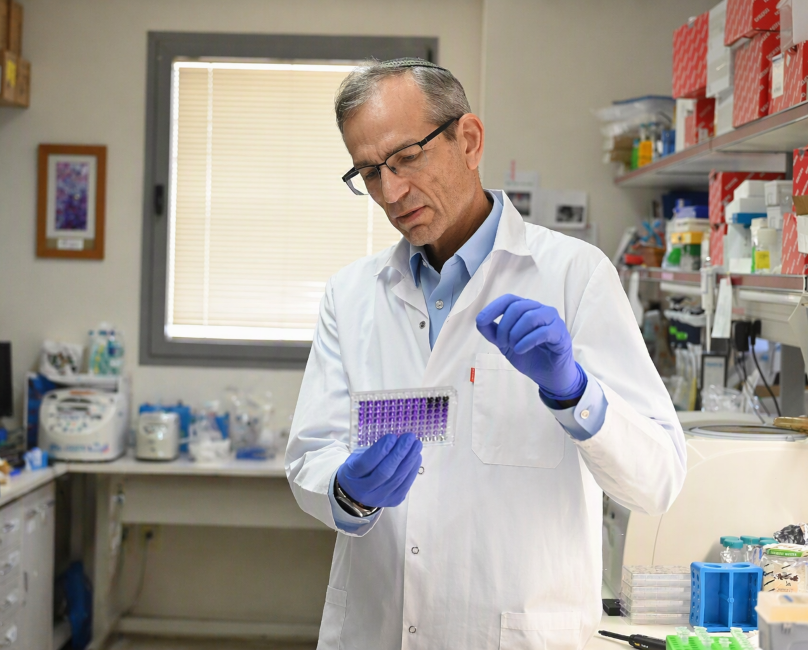
Prof. Haim Putterman, of the Azrieli Faculty of Medicine in the Galilee at Bar-Ilan University and Director of the Research Institute at Galilee Medical Center, is a leading researcher in the field of autoimmune disease immunology. His research focuses on understanding the mechanisms through which systemic lupus erythematosus (SLE) affects the central nervous system.
A recent review of global research on neuropsychiatric lupus identified Prof. Putterman as one of the field’s leading and most influential researchers, ranking him first in the number of publications published over the past two decades.
Over the course of his career at Bar-Ilan University and previously at the Albert Einstein College of Medicine in New York, Prof. Putterman has investigated the processes through which the immune system breaches the brain’s protective barriers, activates immune and glial cells, and disrupts normal neurological function. His work combines advanced disease models, innovative molecular technologies, and high-resolution imaging methods to better understand the mechanisms underlying neurological involvement in lupus.
His research has significantly advanced the understanding that neurological manifestations of lupus are not driven solely by autoantibodies, but also by disrupted communication between the immune system and the brain. His laboratory demonstrated that the blood–cerebrospinal fluid barrier within the choroid plexus serves as a critical site of immune activity, where T cells and B cells infiltrate, proliferate, and form tertiary lymphoid structures. Similar findings have also been identified in tissue samples from lupus patients with neuropsychiatric manifestations.
In addition, his laboratory has identified the important roles of inflammatory mediators such as IL-6 and LCN2 in the development of cognitive and behavioral abnormalities in lupus models, and has highlighted the TWEAK/Fn14 pathway as another key driver of disease progression. More recent studies have shown how IL-6 impairs the normal clearance functions of the blood–cerebrospinal fluid barrier, providing new insights into the accumulation of neurotoxic substances in lupus.
By integrating basic immunological research with translational and clinical studies in lupus patients, and through close collaborations with researchers in Israel and around the world, Prof. Putterman and his team aim to identify new therapeutic targets and develop strategies to prevent or reduce neurological damage in lupus.
The laboratory’s long-term goal is to translate discoveries in neuroimmunology into targeted, personalized therapies that improve the lives of lupus patients in Israel and worldwide.
Research led by Prof. Haim Putterman of the Azrieli Faculty of Medicine in the Galilee at Bar-Ilan University has advanced our understanding of the mechanisms through which the immune system affects the brain in patients with systemic lupus erythematosus (SLE). His work has revealed key roles for immune cells, inflammatory mediators, and disrupted communication between the immune system and the central nervous system in the development of neuropsychiatric manifestations of the disease. These findings are helping to identify new therapeutic targets aimed at preventing neurological damage in lupus.
Prof. Putterman recently received international recognition when a comprehensive review of research in neuropsychiatric lupus ranked him among the world’s leading and most influential researchers in the field, placing him first in the number of publications over the past two decades.
Last Updated Date : 14/07/2026