


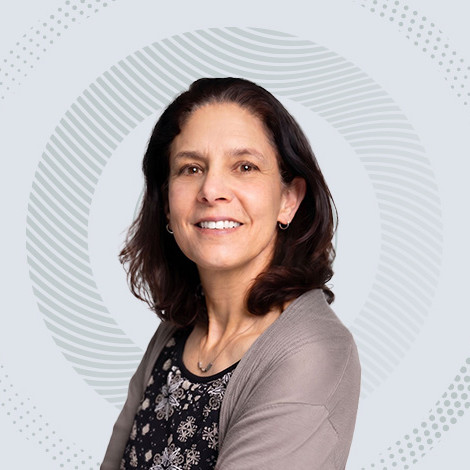
Prof. Ayelet Eden-Arbel
Occurrence of mutations during meiosis, teaching in the biomedical sciences, and medical education
CV
Prof. Ayelet Arbel-Eden is a researcher and lecturer in the fields of genetics, molecular biology, and DNA damage repair. She completed her academic and research training at the Hebrew University of Jerusalem, in the Department of Genetics.
Prof. Arbel-Eden conducted her postdoctoral research at Brandeis University in Boston, USA, where she studied how cells activate checkpoint mechanisms—particularly G2-M checkpoints—in response to DNA damage such as double-strand breaks.
Upon returning to Israel, she joined the faculty of the Department of Medical Laboratory Sciences at the Jerusalem Multidisciplinary Academic Center, and was also invited to serve as a visiting researcher in the Department of Genetics at the Hebrew University. Her research focuses on the genetic and molecular mechanisms underlying the increase in mutation rates during meiotic recombination events.
Prof. Arbel-Eden previously served as Head of the Department of Medical Laboratory Sciences at the Jerusalem Multidisciplinary Academic Center, where she led academic staff from biomedical fields in faculty development processes and research-based teaching initiatives. She currently heads the Unit for Medical Education at the Faculty of Medicine in the Galilee, Bar-Ilan University.
Alongside her academic and research work, Prof. Arbel-Eden places great importance on community involvement and social engagement. She previously directed the academic program “Above and Beyond” (2013–2017), a three-year program promoting excellence, social leadership, and community involvement among students.
Prof. Arbel-Eden is actively involved in and leads several community projects in her Jerusalem neighborhood, and was part of the founding group of “Bostania” — the first community garden in Jerusalem. She also volunteered in and led the social initiative “Rokmim Halom” (“Weaving a Dream”), in which Ethiopian immigrants create traditional embroidery that the group transforms into marketable products. The initiative aims to preserve this vibrant art form, which reflects the rich cultural heritage of Ethiopian Jews, and to foster community, cultural, and social connections through it.
Research
1) Timing of mutation occurrence during meiosis and the Role of the Trans-Lesion DNA Polymerases. (Osama Mansour, Ph.D student)
Meiotic mutations in budding yeast occur at higher frequencies than mutations in vegetatively growing cells and may have long-term evolutionary consequences because they are transmitted through gametes. We study the mechanistic basis of this increased mutagenicity using the CAN1 reporter gene, where mutation rates in meiosis are about 7-fold higher than in mitotic cells. We determine when new meiotic mutations arise and whether they are associated with DNA replication or recombination. Our results show that mutations appear during prophase I, at the time of meiotic double-strand breaks (DSBs) and recombination, rather than during pre-meiotic DNA synthesis. More than 40% of meiotic CAN1 mutations are found on chromosomes that recombined near the reporter, indicating that recombination itself is mutagenic. Because most mutations are introduced when new DNA is synthesized by DNA polymerases, these enzymes are prime candidates for generating meiotic mutations. We therefore test whether low-fidelity trans-lesion DNA polymerases (TLSPs) account for this effect, but they do not appear to be the major source of meiotic mutagenicity.
2) Enhanced mutagenicity in yeast meiosis resulting from DNA repair (Liat Morciano, PhD. Student)
Meiotic de novo mutations (DNMs) arise at higher frequencies than mitotic mutations and are tightly linked to recombination and double-strand break repair. Our previous work showed that meiotic mutagenicity depends on DNA breaks and is associated with recombination, suggesting that DSB repair generates new mutations. We hypothesize that elevated meiotic mutagenicity may also result from unrepaired mismatches left by DNA polymerases during local DNA synthesis in meiotic recombination. We examine the possibility that mismatch repair (MMR) proteins are down-regulated or inefficient during recombination, these mismatches may accumulate and become fixed as mutations during the first round of genome replication in spore germination. Using the CAN1 reporter system, we examine meiotic mutagenicity in strains defective in MMR components, with special emphasis on Msh6 and Msh3.
3) Investigating the Role of Single-Stranded DNA Length in Meiotic De Novo Mutagenesis in Budding Yeast. (Lilia Smusin, MSc. Student)
During meiotic recombination, double-strand break ends are resected to generate single-stranded DNA (ssDNA), which is essential for homology search and repair. However, ssDNA is more vulnerable than double-stranded DNA to mutational damage, raising the possibility that extensive ssDNA formation contributes to elevated meiotic mutagenicity. In a single meiotic cell, approximately 310,000 nucleotides of ssDNA are generated, far exceeding the amount formed spontaneously in mitotically dividing diploid cells. This study asks whether the prolonged exposure of ssDNA generated during meiotic recombination contributes to the increased formation of de novo mutations. We examine meiotic mutagenicity in strains with gene disruptions that alter ssDNA tract length, producing either longer or shorter ssDNA than wild type. By comparing mutation rates and mutation spectra, we aim to determine whether ssDNA exposure is a significant contributor to meiotic mutagenicity.
Publications
Last Updated Date : 23/06/2026